The Flag You Plant: A Pre-Commitment Brand Review for Overseas Expansion
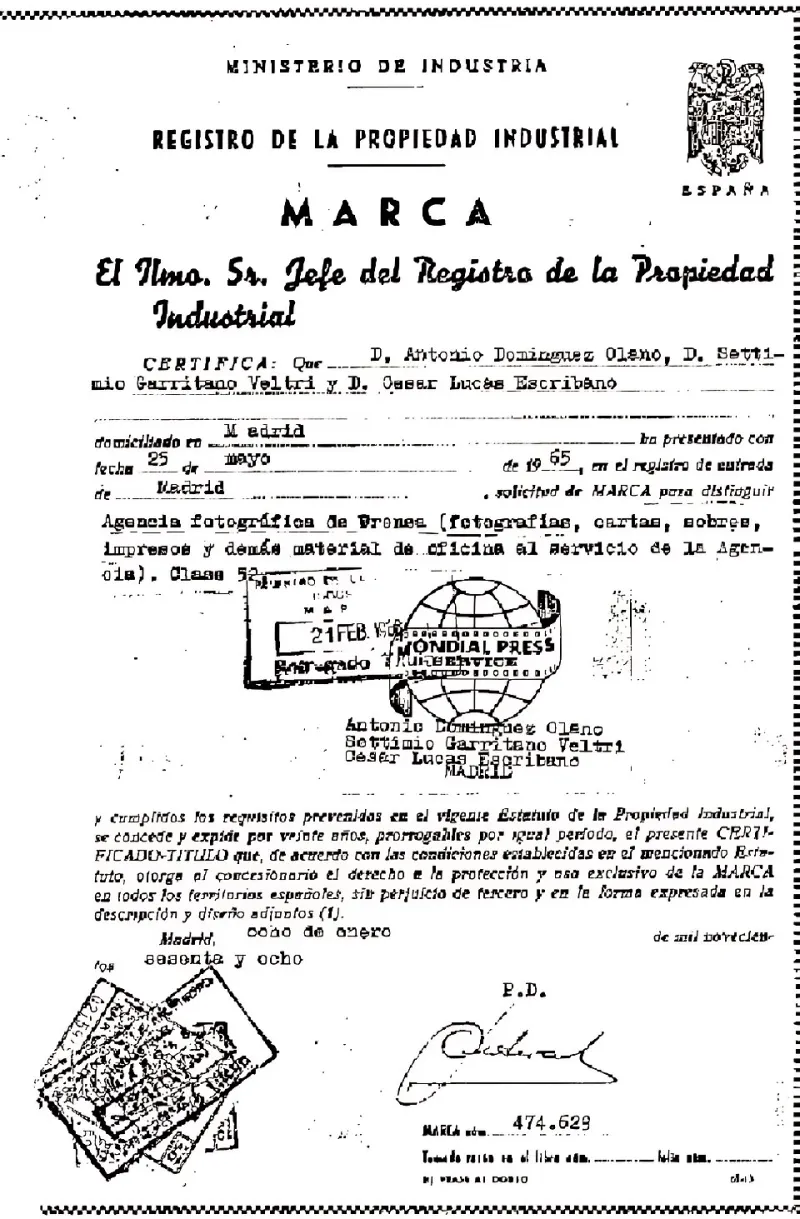
Photo: Registro de la Propiedad Industrial (Spain), CC BY-SA 4.0, via Wikimedia Commons
A UK mid-market company rarely loses control of its brand in a single dramatic moment. More often, the exposure accumulates: a distributor is appointed, packaging is translated, a local website goes live, and only then does someone ask whether the name can be registered in that territory at all. By that stage, the commercial diary is ahead of the legal file. The board is no longer deciding whether to protect the brand; it is deciding how much it will cost to recover it.
The right moment for a trademark audit is before commitment, not after launch. That means before the distributor agreement is signed, before the subsidiary is incorporated, and before the local marketing spend begins. The purpose is not to produce a long legal opinion for its own sake. It is to give the board a clear view of whether the brand can be registered, who should own it, how it should be licensed, and what evidence should be retained if the position is challenged.
Begin with the register, not the distributor’s enthusiasm
A local partner’s confidence that the name is available is not evidence. In many jurisdictions, the first reliable signal comes from a search of the national trademark register, supplemented by common-law and market checks. The board should ask for a search report that covers the exact mark, close variants, transliterations and the classes relevant to the goods or services in scope. For consumer-facing businesses, the search should also consider whether the mark carries an unfortunate meaning or is difficult to pronounce in the local language.
The audit should distinguish between two questions. The first is whether the mark is available for use. The second is whether it is available for registration. They are not the same. A name may be free of obvious conflicts yet still be descriptive, generic or otherwise difficult to defend. In some markets, prior use by an unregistered trader can create rights that do not appear on the register. In others, a local distributor or employee may have already filed the mark in bad faith. The board does not need every answer before entering, but it does need to know which risks are material and which are manageable.
Madrid or local: a routing decision, not a religion
The Madrid Protocol offers a familiar route for UK applicants seeking protection in multiple territories. It allows a single application, in one language, with a single set of fees, to designate a number of contracting parties. For a company entering several markets at once, that can be efficient. But it is not automatically the right route. The Madrid system depends on the home application or registration for a period, and a central attack on the UK base mark can affect the international registration. Some national systems also have particular examination practices, use requirements or local agent rules that make a direct filing more practical.
A board-level review should compare the routes rather than default to the one that feels administratively neat. The comparison should cover cost, timing, the scope of goods and services, the likelihood of office objections, and the practical burden of responding to local examiners. In some territories, a local filing may be quicker or more robust. In others, a Madrid designation may be the sensible first step, with local filings held in reserve for key markets. The decision should be recorded, with the reasons, so that the board can see why one route was chosen over another.
Ownership: keep the mark in the parent’s name
One of the most common errors in overseas expansion is allowing the local subsidiary, distributor or founder to register the mark in its own name. The commercial logic can seem innocent: the local entity is handling the launch, so it files the application. The legal consequence is less innocent. The UK parent may find that it does not own the asset it has spent years building. Recovering the mark can require assignment negotiations, local litigation or a costly rebrand.
The default position should be that the UK parent, or a dedicated IP holding company within the group, owns the trademark. Local subsidiaries should use the mark under a written licence, even where they are wholly owned. The licence does not need to be elaborate, but it should be consistent across territories and should be recorded where local law requires it. The board should also check that the group’s internal IP policy actually reflects this position. A policy that says the parent owns all brand rights is of little use if the local managing director has already signed the application.
Licensing to local partners without losing control
Where a distributor, franchisee or joint-venture partner will use the brand, the licence terms deserve the same attention as the commercial terms. The licence should define the territory, the permitted goods or services, the term, and the standards the licensee must meet. It should make clear that use of the mark accrues to the licensor, not the licensee. It should require the licensee to cooperate with registration and enforcement, and to notify the licensor of any infringement or conflicting application.
Quality control is not a formality. In some jurisdictions, uncontrolled licensing can weaken the mark or create uncertainty about its ownership. The board should ask who will approve local packaging, advertising and digital assets, and how that approval will be documented. The licence should also address what happens on termination: the licensee must stop using the mark, transfer any local registrations or domain names, and hand over materials that carry the brand. These points are easier to agree at the outset than to enforce after a relationship has broken down.
A board evidence file
The output of the audit should be a short evidence file, not a shelf of unread annexes. It should record the territories in scope, the searches commissioned, the filing routes selected, the owner of each application, the licence terms agreed with local partners, and the renewals and use evidence required to keep the registrations alive. It should also identify the markets where the board has accepted a residual risk, and why.
That file gives the board a defensible position when the first distributor asks for exclusivity, when a local competitor files a conflicting mark, or when an investor asks who owns the brand. The flag a UK company plants overseas should be one it can defend. A pre-commitment trademark review is how the board makes that outcome more likely.