The Version That Prevails: A Board's Evidence File for Translated Overseas Contracts
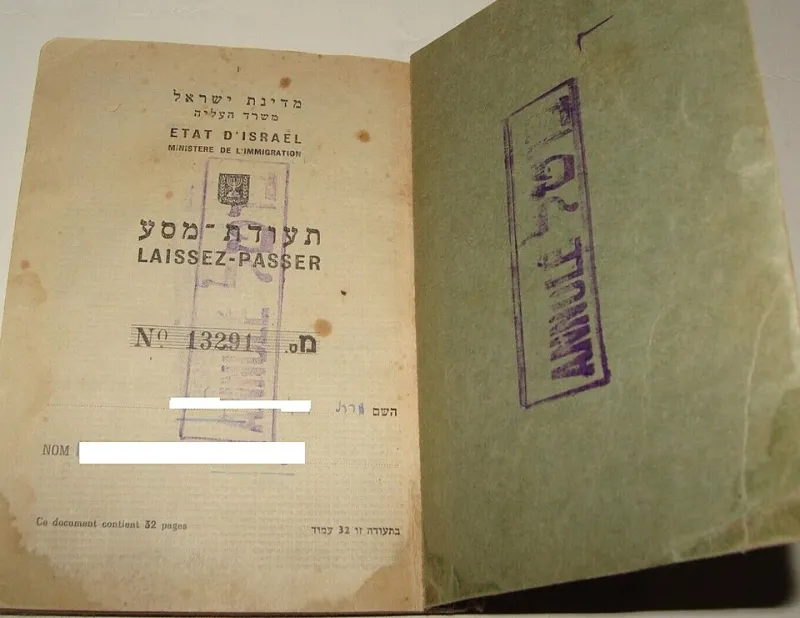
Photo: Rakoon, Public domain, via Wikimedia Commons
A UK specialist manufacturer concludes a distribution agreement with a partner in Central Europe. The negotiation is conducted in English; the signed document is produced in two columns, English and the local language. Eighteen months later, a routine tax inspection in the partner's jurisdiction produces the local-language text. It contains an indemnity clause the UK board does not recognise, and a termination notice period two months longer than the English column. The finance director is asked a simple question: which version did the company agree to? The honest answer is that nobody in the UK office can say with confidence.
Such moments rarely turn on a point of law alone. They turn on evidence. A board that cannot produce a clear record of which text governs, who approved the translation, and how later amendments were incorporated is poorly placed to argue that the English version should prevail. The governing-language question is therefore less a drafting nicety than a matter of corporate record-keeping.
The governing-language clause settles less than boards assume
Most cross-border agreements include a clause stating that one language prevails in the event of inconsistency. That clause is necessary, but it is not self-executing. It tells a court or arbitrator which text to prefer; it does not tell the company where that text is held, who certified it, or whether the prevailing version was the one filed with a local registry.
Boards should treat the clause as an instruction to build a file, not as a substitute for one. The clause should identify the prevailing language precisely — “English” is not enough if the agreement is executed in England and Wales but performed in a jurisdiction where “English” could mean either the language or the legal tradition. It should also state what happens to the non-prevailing text: is it a courtesy translation, an equally authentic version, or a reference only? Those distinctions matter when a counterparty later relies on the other column.
Translation warranties and the paper trail
A certified translation is only as useful as the warranty behind it. When a company commissions a translation for filing or for a counterparty, the engagement should record who produced it, their qualifications, the source text used, and the date. A translator's certificate that simply says “true translation” without identifying the source version is weak evidence if the source itself is later disputed.
The board's file should hold the translator's credentials, the instruction letter, and a copy of the exact source document translated. If the translation was prepared by the counterparty, the company should seek a reciprocal warranty that it is accurate and complete, and should retain the right to commission its own verified version. That is not mistrust; it is the same discipline a buyer applies to any other document supplied by a vendor.
Notarisation and apostille: the chain of custody
Local registries, banks and tax authorities often require notarised documents bearing an apostille under the Hague Apostille Convention. The practical risk is not the apostille itself but the sequence. A translation notarised before the underlying signature was witnessed, or an apostille attached to a copy that does not match the executed original, creates a gap that can be exploited or simply rejected.
The board should keep a chain-of-custody note for each filed document: the executed original, the certified translation, the notarial certificate, the apostille, and the date and place of filing. Where a foreign registry retains the original, the company should hold a certified copy and a receipt. These are unglamorous records, but they are the ones that answer the question “what did you file, and when?” without reliance on memory or on a local adviser's file.
When amendments arrive in one language only
The most common source of drift is not the original translation but the amendment. A side letter, a change of payment terms, a variation to scope — these are often negotiated in English and signed by email, then implemented locally in the other language without a matching translation. Over time, the two versions diverge, and the governing-language clause is tested not on the original text but on a patchwork.
A board-level discipline is to require that every amendment be executed in the same languages as the original, with the same governing-language clause restated or incorporated. If a local filing requires a translated amendment, the company should hold both the executed English variation and the filed translation, with a note explaining any difference. The master version should be updated in one place, and that place should be known to the board, not only to the overseas subsidiary.
Who owns the master version
Ownership is an organisational question with evidential consequences. In many UK groups, the master copy of an overseas contract sits with the local managing director, the external adviser, or a shared drive that no one has audited since completion. When a dispute or inspection arises, the board discovers that the “master” is whichever version the local office can find.
A simple control is to designate a contract owner at group level — often legal counsel or the company secretary — responsible for holding the executed versions, the translations, the filing receipts and the amendment log. The local team retains operational copies, but the group file is the reference point. That arrangement should be recorded in the board minutes or a delegation schedule, so that the question “who holds the master?” has a documented answer.
A file a board can defend
The test is not whether the company can win an argument about translation; it is whether the company can show, without reconstruction, what it agreed to and what it filed. A defensible file contains the executed agreement in both languages, the governing-language clause highlighted, the translator's certificate and credentials, the notarisation and apostille record, the filing receipts, and a log of every amendment with its language versions.
None of this prevents a counterparty or a tax authority from presenting a translation the company has never formally approved. But it changes the conversation. Instead of a scramble to establish which text is authentic, the board can point to the version it authorised, the version it filed, and the record that connects them. In cross-border trade, that is often the difference between a manageable query and an expensive dispute.